Introduction
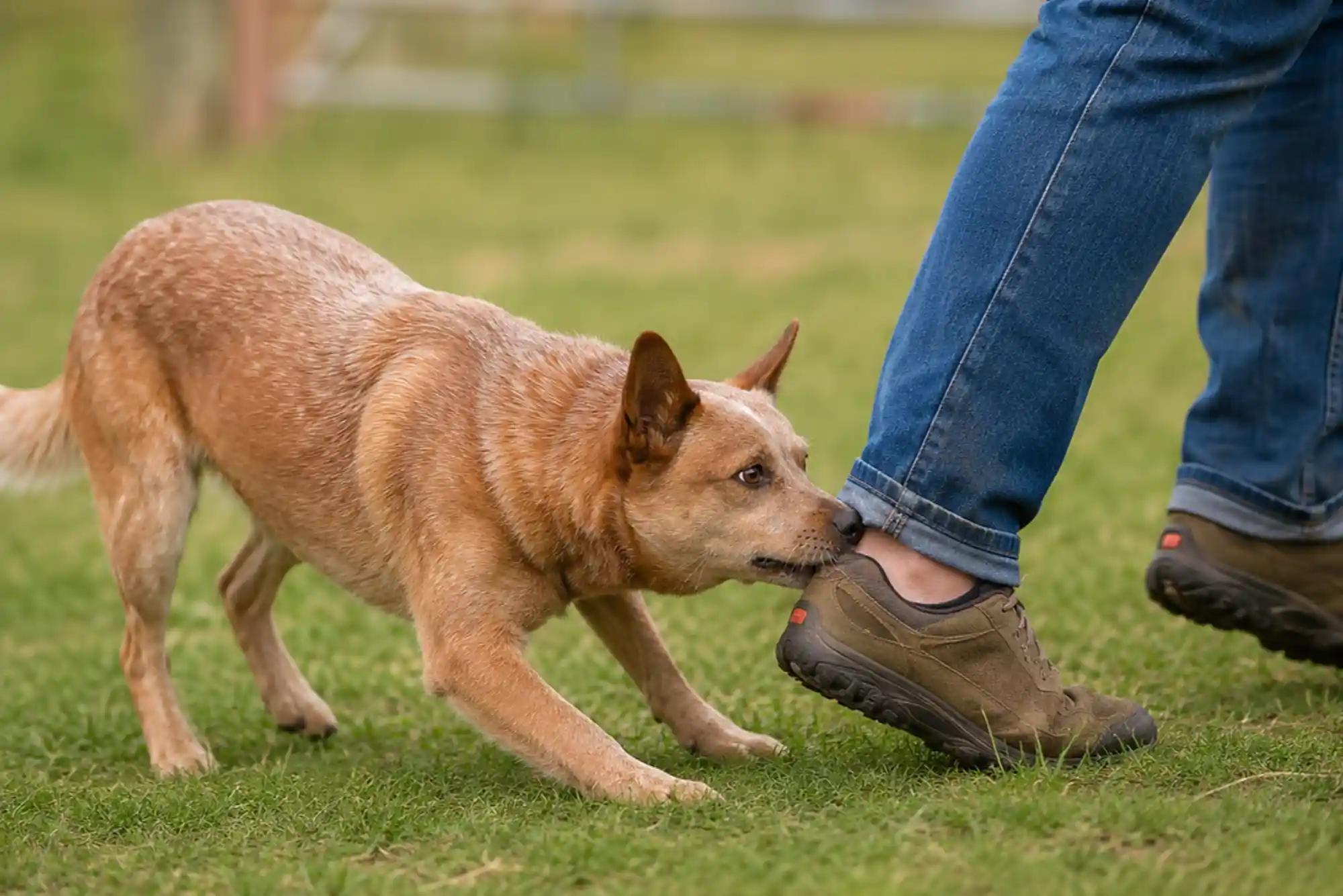
Puppies often bite ankles and pant legs during walks because they are excited, playful, or easily overstimulated. Although this behavior can be frustrating, it is usually a normal part of puppy development. Understanding the cause makes training much easier.
Learning how to stop a puppy from biting ankles and pant legs during walks requires patience, consistency, and positive reinforcement. Puppies explore their surroundings with their mouths. They may also chase moving feet because movement triggers their natural play and chasing instincts.
Fortunately, you can teach your puppy to walk calmly without grabbing clothing or nipping at your legs. The key is to redirect unwanted behavior while rewarding better choices. With regular practice, your puppy can learn that walking beside you is more rewarding than biting your clothes.
Why Puppies Bite Ankles and Pant Legs During Walks
Understanding why your puppy bites helps you choose the right training approach. Different triggers can produce similar behaviors, so observing your puppy is an important first step.
Excitement and Playfulness
Many puppies become excited when they go outside. Moving feet, swinging trousers, and changing walking speeds can resemble toys. Consequently, your puppy may chase your ankles and grab your pant legs during walks.
This behavior is especially common in energetic puppies that have not learned appropriate play boundaries. Instead of punishing the puppy, teach an alternative behavior that keeps its attention on you.

Teething and the Need to Chew
Teething puppies experience discomfort as their adult teeth develop. Chewing can help relieve this discomfort, making clothing an appealing target. Loose trousers and dangling fabric may be particularly tempting.
Offering a suitable chew toy before walking can help redirect this natural urge. However, teething is not always the explanation. Puppies may bite because they are excited, frustrated, tired, or seeking attention.
Overstimulation and Tiredness
Puppies have limited attention spans and can become overwhelmed by busy environments. Traffic, unfamiliar smells, other dogs, and new people may increase their excitement.
When a puppy becomes overstimulated, its ability to respond to familiar commands may decrease. Biting can become more frequent, even if the puppy behaved well earlier.
Shorter walks, quiet routes, and regular rest periods can help prevent these episodes.
How to Stop a Puppy from Biting Ankles and Pant Legs During Walks
The most effective approach combines prevention, redirection, and rewards. Instead of waiting until biting becomes intense, intervene when you first notice your puppy becoming excited.
Stop Moving When Biting Begins
When your puppy grabs your trousers, stop walking immediately. Avoid pulling your leg away quickly because the movement may encourage chasing.
Keep your body calm and give your puppy a moment to release the fabric. Once the puppy lets go, reward the behavior with praise or a small treat.
If the puppy continues biting, calmly create some distance or use a barrier when safe. Avoid dragging the puppy by its collar or shouting, as these reactions can increase frustration.
Redirect Biting Toward an Appropriate Toy
Carry a small, puppy-safe toy during walks. When your puppy starts targeting your ankles, offer the toy as an alternative.
Reward your puppy when it chooses the toy instead of your clothing. Over time, this teaches an important lesson: biting an appropriate object keeps play available, while grabbing trousers does not.
Choose toys that are suitable for your puppy’s size and chewing strength. Supervise play and replace damaged toys to prevent accidental swallowing.
Reward Calm Walking
Positive reinforcement helps puppies understand which behaviors produce desirable outcomes. Carry small treats and reward your puppy whenever it walks beside you without grabbing your clothes.
Initially, reward frequently. As your puppy improves, gradually increase the distance between rewards.
Use a consistent verbal cue, such as “let’s go,” to encourage forward movement. Keep the leash loose whenever possible and praise your puppy for checking in with you.
Short, successful training sessions usually work better than expecting a young puppy to behave perfectly throughout a long walk.
Teach Alternative Behaviors Before Problems Start
Prevention is often easier than correcting biting after it begins. Teaching simple behaviors at home creates useful habits that transfer to outdoor walks.
Practice Walking Indoors
Begin in a quiet room with minimal distractions. Encourage your puppy to follow you for a few steps, rewarding it for remaining beside you.
Gradually introduce changes in direction and walking speed. If your puppy starts grabbing your trousers, pause and redirect its attention.
Once your puppy can walk calmly indoors, practice in a garden or another quiet outdoor space. Increase distractions gradually rather than moving immediately into a busy environment.
Teach a Reliable Attention Cue
Choose a cue such as “look” or your puppy’s name. Reward your puppy whenever it turns toward you after hearing the cue.
During walks, use this signal before your puppy becomes overly excited. Rewarding attention helps interrupt the cycle of chasing and biting.
Keep training sessions short and enjoyable. If your puppy repeatedly ignores the cue, reduce distractions and make the exercise easier.
Encourage Sniffing and Exploration
Walks should provide mental stimulation, not just physical exercise. Allowing your puppy to sniff safe areas can reduce frustration and provide an appropriate outlet for curiosity.
However, avoid overwhelming your puppy with excessive activity. Young dogs need sufficient sleep and recovery time.
If biting increases near the end of a walk, consider whether your puppy is tired. Ending the session calmly may be more productive than continuing to demand attention.
What Not to Do When Your Puppy Bites Your Clothes
Certain reactions can accidentally make ankle biting more rewarding. Running away, kicking your legs, or waving your hands may encourage your puppy to chase and grab harder.
Avoid physical punishment, yelling, or forcibly holding your puppy’s mouth shut. These methods can create fear, increase arousal, or damage trust.
Do not use your trousers or hands as play objects. Even occasional games involving clothing can confuse your puppy about what is acceptable.
Instead, remain calm, interrupt the interaction, and redirect your puppy toward a suitable activity. Consistent responses help your puppy understand the boundaries more quickly.
How Long Does It Take to Stop Puppy Biting During Walks?
Progress depends on your puppy’s age, temperament, environment, and training consistency. Some puppies improve within days, while others need several weeks of regular practice.
Expect occasional setbacks, particularly during teething, exciting outings, or changes in routine. A difficult walk does not mean your training has failed.
Focus on gradual improvement rather than expecting immediate perfection. For example, celebrate when your puppy walks calmly for a short distance before attempting a longer route.
Keep a simple record of when biting happens. Noticing patterns can reveal whether excitement, tiredness, hunger, or environmental distractions are contributing to the problem.
When Should You Seek Professional Help?
Occasional playful mouthing is common, but persistent or intense biting may require additional support. Contact your veterinarian if the behavior appears suddenly, seems painful, or occurs alongside other concerning changes.
Seek help from a qualified, reward-based dog trainer if your puppy repeatedly lunges at your legs, breaks skin, guards objects, or becomes difficult to redirect.
A professional can assess your puppy’s body language and identify triggers that may not be obvious. Early guidance can prevent unwanted habits from becoming more established.
Frequently Asked Questions
Why does my puppy bite my ankles when I walk?
Puppies often bite ankles because moving feet trigger chasing and play instincts. Teething, excitement, frustration, and tiredness can also contribute. Observe when the behavior happens to identify its likely cause.
How do I stop my puppy from biting my pant legs?
Stop moving when your puppy grabs your clothing, then calmly redirect its attention toward a suitable toy. Reward your puppy for releasing the fabric and walking beside you. Consistency is essential for lasting improvement.
Should I ignore my puppy when it bites my legs?
Briefly removing attention can help when biting is intended to start play. However, simply ignoring intense biting may not be enough. Stop safely, avoid exciting movements, redirect your puppy, and reward calmer behavior.
Is ankle biting normal in puppies?
Yes, ankle biting is relatively common in puppies because they explore through their mouths and react to movement. Nevertheless, it should be redirected consistently so it does not become an established walking habit.
Does my puppy bite my ankles because it is tired?
Tiredness can contribute to biting, particularly when a puppy becomes overstimulated. If the behavior increases toward the end of a walk, try a shorter route and provide an opportunity to rest.
Conclusion
Learning how to stop a puppy from biting ankles and pant legs during walks starts with understanding your puppy’s needs. Excitement, teething, frustration, and tiredness can all contribute to this frustrating behavior.
Related Reading: How to Introduce a New Cat to a Dog: Scent Swapping and Visual Barrier Protocols