
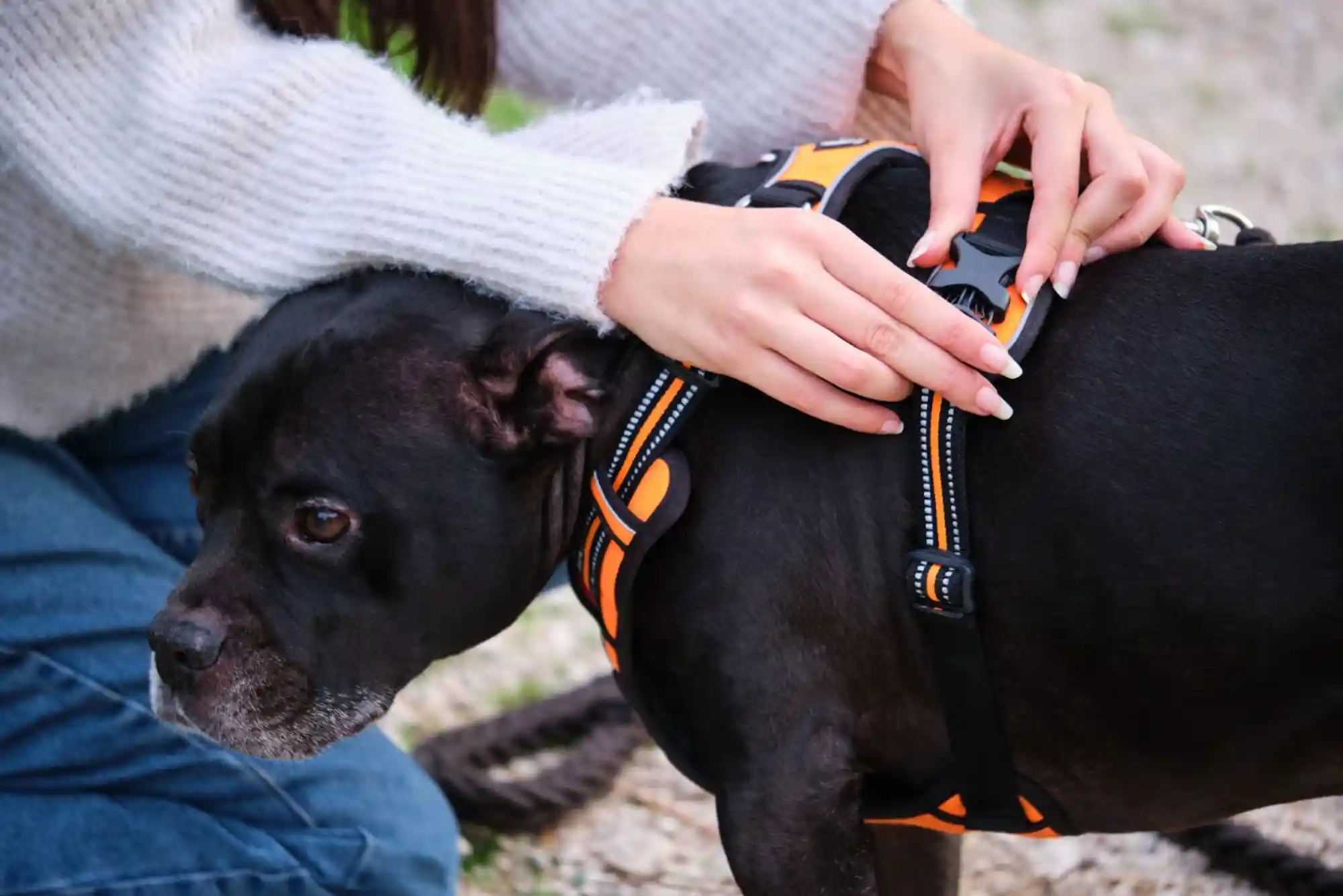
Introduction
Walking a powerful dog is different from walking a dog that naturally stays beside you. Pitbulls, Boxers, and other strong pullers can put substantial force into a leash when they spot another dog, chase a squirrel, or become excited by something ahead. That is why choosing the right heavy duty no-pull harnesses requires more than looking for thick straps or a tough appearance.
A good harness should provide dependable control while remaining comfortable enough for regular walks. It should stay correctly positioned when the dog changes direction, resist excessive wear, and provide a useful leash attachment point for redirecting forward momentum. Current comparisons of strong-dog harnesses commonly emphasize front attachment points, secure fitting, durable hardware, and designs that resist shifting.
For strong dogs, the goal is not to overpower pulling with equipment. The goal is to improve handling while teaching the dog that walking on a loose leash is rewarding. The best heavy duty no-pull harnesses therefore work as part of a broader training routine rather than acting as a replacement for training.
What Makes Heavy Duty No-Pull Harnesses Different?
A conventional back-clip harness gives a dog a relatively straight path to lean into. When a strong dog pulls from a rear attachment point, its body can remain aligned with the direction of travel, allowing it to use its chest and shoulders efficiently.
A front-clip harness changes that mechanical advantage. When the dog moves forward against leash tension, the attachment point near the chest can help turn the shoulders toward the handler. This can make sudden pulling easier to redirect.
For particularly strong dogs, dual-attachment systems can provide another level of control. Some designs combine a front chest connection with a back attachment or martingale-style system. The 2 Hounds Design Freedom No-Pull Harness, for example, uses front and back connection points, stainless-steel hardware, a martingale loop, velvet lining, and manufacturer-stated 3,800-pound-test webbing.

That does not mean the strongest-looking harness is automatically the safest or most effective. Fit, placement, comfort, and the individual dog’s behavior matter just as much.
Best Heavy Duty No-Pull Harnesses for Pitbulls
Pitbull-type dogs often have broad chests, muscular shoulders, and considerable pulling strength. Those characteristics make harness stability especially important. A loose harness can shift sideways, while a poorly shaped design may allow an athletic dog to back out.
A dedicated no-pull system such as the 2 Hounds Design Freedom is worth considering when the primary problem is persistent leash pulling. Its front connection is intended to redirect the chest, while its martingale loop responds when the dog surges. The manufacturer also uses a soft velvet lining around areas that can experience rubbing.
The design is particularly interesting for owners who want more control without relying on painful corrections. The company describes the pressure as being distributed around the chest and torso rather than the throat.
Another option is the Ruffwear Front Range Harness. It is less specialized as an anti-pull system but offers both front and rear leash attachment points, four adjustment points, and foam-padded construction. Ruffwear specifically describes the reinforced front clip as a way to redirect dogs that pull on leash.
For a Pitbull that pulls moderately and also spends a lot of time hiking, walking, or exploring outdoors, an everyday harness with a front attachment may provide a useful balance between control and comfort.
Best Heavy Duty No-Pull Harnesses for Boxers
Boxers present a different fitting challenge. Their athletic bodies are deep through the chest and narrower toward the waist. They can also pull suddenly rather than maintaining a constant, steady load.
That combination makes harness movement an important consideration. A harness that rotates or rides toward the shoulders can become uncomfortable and may not provide consistent control. Current Boxer-focused comparisons emphasize front attachment points, adequate chest coverage, shoulder clearance, and stable adjustment.
The Ruffwear Front Range can be useful for owners who want an everyday harness with a front control option. Its sizing is based on rib-cage girth, and the current model covers approximately 13 to 42 inches depending on size. Ruffwear recommends measuring around the widest part of the rib cage and selecting the larger size when between sizes.
For a Boxer that consistently surges toward distractions, the 2 Hounds Freedom design offers a more dedicated no-pull approach. Its two connection points provide additional options for steering and managing forward movement.
The right choice depends on whether your main concern is everyday comfort, strong pulling, escape behavior, or a combination of these issues.
Kurgo Enhanced Strength Tru-Fit for Strong Pullers
The Kurgo Enhanced Strength Tru-Fit takes a slightly different approach. It combines walking control with vehicle use, making it appealing to owners who want one harness to serve multiple purposes.
Kurgo describes the harness as having five adjustment points, all-steel nested buckles and hardware, a padded chest plate, and both front and rear leash attachments. It is also designed for car restraint use and includes a seat-belt loop. Kurgo states that the harness was crash-tested for dogs up to 34 kilograms using testing based on the U.S. Federal Motor Vehicle Safety Standard for child restraint systems.
For a strong dog that regularly travels by car, this combination can be convenient. However, car safety claims should be interpreted carefully. A manufacturer’s crash-testing statement is not the same thing as independent certification by a pet safety organization. Current comparisons make this distinction when discussing the Kurgo harness.
As a walking harness, its front attachment can help redirect pulling. Its multiple adjustment points can also help create a more secure fit on dogs whose body shape makes simple harnesses shift.
Why the Front Clip Matters for Strong Dogs
The front clip is one of the most important features to understand when shopping for heavy duty no-pull harnesses.
A back clip allows the dog to pull directly forward. A front clip changes the direction of the leash connection when the dog moves ahead. Instead of simply resisting the dog’s forward force, the handler can use gentle leash guidance to turn the dog’s chest and shoulders.
This does not mean the harness physically prevents pulling. Rather, it can make pulling less mechanically efficient.
That distinction matters. If a dog has learned that pulling produces forward movement, equipment alone will rarely solve the behavior. The handler still needs to reward loose-leash walking and avoid accidentally rewarding lunging by allowing the dog to reach whatever it is pulling toward.
A front clip works best when paired with calm handling and consistent training.
How to Choose the Right Heavy Duty No-Pull Harness
Start With Chest Measurement
Breed labels are not enough. Two Pitbulls can have dramatically different chest shapes, and two Boxers of similar weight may require different harness sizes.
Measure around the widest part of the rib cage according to the manufacturer’s instructions. Do not rely only on weight because weight does not tell you how long, deep, or broad the dog’s body is.
A correctly fitted harness should remain secure without being excessively tight. You should also check that straps do not sit directly across sensitive areas or interfere with normal shoulder movement.
Look at the Attachment Hardware
Strong dogs put significant stress on buckles, rings, stitching, and webbing. Examine the complete construction rather than focusing on one metal ring.
The 2 Hounds Freedom, for example, uses stainless-steel hardware and manufacturer-stated high-strength webbing. Kurgo’s Enhanced Strength Tru-Fit uses steel hardware and nested buckles.
These details matter when a dog repeatedly lunges or pulls.
Check for Shoulder Clearance
A heavy-duty harness should not simply be strong. It should allow the dog to walk naturally.
Watch your dog move at a normal pace after fitting the harness. Look for rubbing behind the front legs, straps moving into the armpits, or material restricting the shoulders.
This is especially important for muscular and athletic breeds because they may move with considerable range through the shoulders.
Consider Escape Resistance
Some strong dogs are also talented escape artists. If your dog backs up whenever something scares it, a basic two-strap harness may not provide enough security.
A more secure design can reduce the opportunity for the dog to reverse out. This is one reason third-strap or more structured harness designs are sometimes considered for escape-prone dogs. Current strong-dog comparisons specifically highlight escape resistance as an important consideration.
Heavy Duty Does Not Mean Uncomfortable
It is tempting to assume that thicker webbing, more padding, and heavier hardware automatically create a better harness. That is not necessarily true.
A bulky harness can become irritating during long walks. Excess material may also trap heat or interfere with natural movement. The objective should be appropriate strength rather than maximum bulk.
For everyday walking, the Ruffwear Front Range emphasizes padded construction and four adjustment points while still providing front and back attachment options.
For a dog that requires stronger anti-pull control, a more specialized system may make sense. The important point is to match the harness to the dog’s behavior instead of buying the most heavily constructed model available.
How to Use a No-Pull Harness With Training
A no-pull harness should make training easier, not replace it.
Begin in a low-distraction environment. Reward your dog whenever the leash remains loose. If the dog moves ahead and creates tension, slow down or change direction rather than engaging in a prolonged tug-of-war.
As the dog improves, gradually introduce distractions. Reward attention, calm movement, and voluntary check-ins.
Avoid deliberately jerking the leash or using excessive force. Reward-based training is widely recommended for teaching desirable behavior, and current harness comparisons also emphasize that equipment should complement rather than replace loose-leash training.
Consistency matters more than the particular harness. Even an extremely durable harness cannot teach a dog that pulling is unnecessary.
How Long Should a Heavy Duty Harness Last?
There is no universal lifespan because durability depends on the dog’s strength, walking habits, weather exposure, frequency of use, and how often the harness is washed.
Inspect the harness regularly. Pay particular attention to stitching, buckles, rings, adjustment points, and areas that experience friction. If webbing becomes significantly frayed or a buckle no longer locks securely, replace the harness.
A harness can look acceptable from a distance while developing wear in a high-stress area. Strong pullers deserve particularly frequent inspections because equipment failure can happen at exactly the moment the dog is applying the most force.
Are No-Pull Harnesses Safe for Strong Dogs?
A properly fitted no-pull harness can provide useful control while distributing leash forces through the dog’s body rather than relying solely on the neck. However, no harness is automatically safe simply because it is marketed as heavy duty.
Fit remains critical. A harness that rubs, restricts movement, rotates excessively, or places pressure in an inappropriate location should be adjusted or replaced.
Owners should also remember that a no-pull harness is walking equipment, not a substitute for behavioral training. If a dog is extremely reactive, repeatedly lunges at people or animals, or is difficult to control even with appropriate equipment, working with a qualified reward-based trainer can be valuable.
Which Harness Features Matter Most for Strong Pullers?
For a Pitbull, Boxer, or similarly powerful dog, the most useful features generally come down to secure fit, durable construction, an effective front attachment, and comfortable body contact.
A dedicated system such as the 2 Hounds Freedom emphasizes front and back connections, a martingale loop, stainless-steel hardware, and strong webbing.
The Ruffwear Front Range focuses more on everyday comfort while still providing a reinforced front clip and four adjustment points.
The Kurgo Enhanced Strength Tru-Fit adds heavy-duty hardware and vehicle-use functionality alongside front and rear leash connections.
Rather than choosing purely by brand reputation, compare those features with your dog’s actual behavior and body shape.
FAQs
What is the best harness for a Pitbull that pulls?
A dedicated front-clip or dual-connection harness can be useful for a Pitbull that pulls strongly. The 2 Hounds Design Freedom is specifically designed around front and back connections and a martingale loop, while the Ruffwear Front Range offers a front clip within a more general-purpose padded design.
What is the best harness for a Boxer that pulls?
Look for a harness that accommodates a deep chest, stays clear of the shoulders, and provides a front attachment point. The Ruffwear Front Range and 2 Hounds Freedom are both examples of designs that provide front attachment options for redirecting pulling.
Do no-pull harnesses really work?
They can make pulling easier to manage by changing where leash force is applied and improving the handler’s ability to redirect the dog. However, they do not automatically teach loose-leash walking. Training and reinforcement remain important.
Is a front-clip harness better for strong pullers?
A front clip can provide more useful leverage than a traditional back clip because it can redirect the dog’s chest when it moves forward. Whether it is appropriate depends on the individual dog’s fit, behavior, and comfort.
Can a strong dog break a harness?
Yes. Any harness can eventually fail if its webbing, stitching, buckle, or attachment hardware becomes damaged. Strong pullers should have their equipment inspected regularly, especially after hard lunges or frequent outdoor use.
Should a Pitbull wear a collar or harness?
A harness can provide more control during walks while distributing leash forces across the body. A collar may still be useful for identification and other purposes. The appropriate setup depends on the dog’s training, health, behavior, and individual needs.
Finding the right heavy duty no-pull harnesses for Pitbulls, Boxers, and strong pullers is ultimately about matching construction and design to the individual dog. A muscular dog needs secure hardware, a stable fit, comfortable contact points, and a leash attachment that gives the handler useful control.
The 2 Hounds Design Freedom focuses heavily on dedicated no-pull control, while the Ruffwear Front Range provides a comfortable everyday design with front and rear attachment options. The Kurgo Enhanced Strength Tru-Fit adds heavy-duty hardware and vehicle-use functionality.