Introduction
Taking your dog for a walk while pushing a stroller can be convenient, but it requires more preparation than an ordinary leash walk. A dog may suddenly pull toward another animal, cross in front of the wheels, chase something moving, or lunge at a person. Learning how to train a dog to walk beside a stroller helps create a calmer and safer routine for both the dog and the person pushing the stroller.
The stroller itself changes the walking environment. It moves differently, takes up space, makes sounds, and can limit how quickly you respond to your dog’s movements. Even a dog that normally walks well may need additional practice. The goal is not to force your dog into a rigid heel. Instead, teach relaxed leash walking, a predictable position, reliable attention cues, and calm responses to distractions.
Reward-based training and gradual exposure are particularly useful because they allow the dog to learn without being overwhelmed. The process should begin in a quiet environment and become more challenging only as your dog succeeds.
Why Stroller Walking Needs Special Training
When you learn how to train a dog to walk beside a stroller, you are combining several skills at once. Your dog needs to understand leash manners while also becoming comfortable with a moving object beside them.
A stroller can change your pace and walking position. You may have one hand occupied, and your attention naturally has to remain on the path ahead. If your dog suddenly moves across the stroller’s path, you may have less time to react.
Dogs can also react differently depending on their motivation. Pulling may happen because your dog wants to sniff, greet another dog, chase movement, or move toward an interesting object. Lunging may be related to excitement, frustration, fear, or over-arousal.

That does not automatically mean your dog is aggressive. It means the dog needs an appropriate alternative behaviour and enough distance from triggers to learn it successfully.
Start With Loose-Leash Walking
Before introducing the stroller, establish good leash habits without it. This makes how to train a dog to walk beside a stroller much easier because you are not teaching every skill simultaneously.
Begin somewhere quiet. Reward your dog for walking near you while the leash remains slack. Small treats can be useful at first, especially when your dog is learning.
When the leash becomes tight, stop moving. Wait for your dog to create some slack or return toward you. Once the leash is loose again, reward the behaviour and continue.
The lesson is simple: pulling does not make the walk move forward, while calm walking allows the walk to continue. This principle is also consistent with guidance from the American Kennel Club on loose-leash walking.
Teach an Attention Cue
Choose a short cue such as “look,” “with me,” or your dog’s name. Say the cue indoors and reward your dog immediately when they look toward you.
Once your dog understands the cue, practise it in increasingly distracting environments. Do not expect a perfect response immediately outside.
An attention cue becomes particularly valuable during stroller walks because it can help you redirect your dog’s focus before pulling or lunging becomes intense.
Introduce the Stroller While It Is Stationary
One of the most common mistakes is taking a dog straight onto a busy street with a moving stroller.
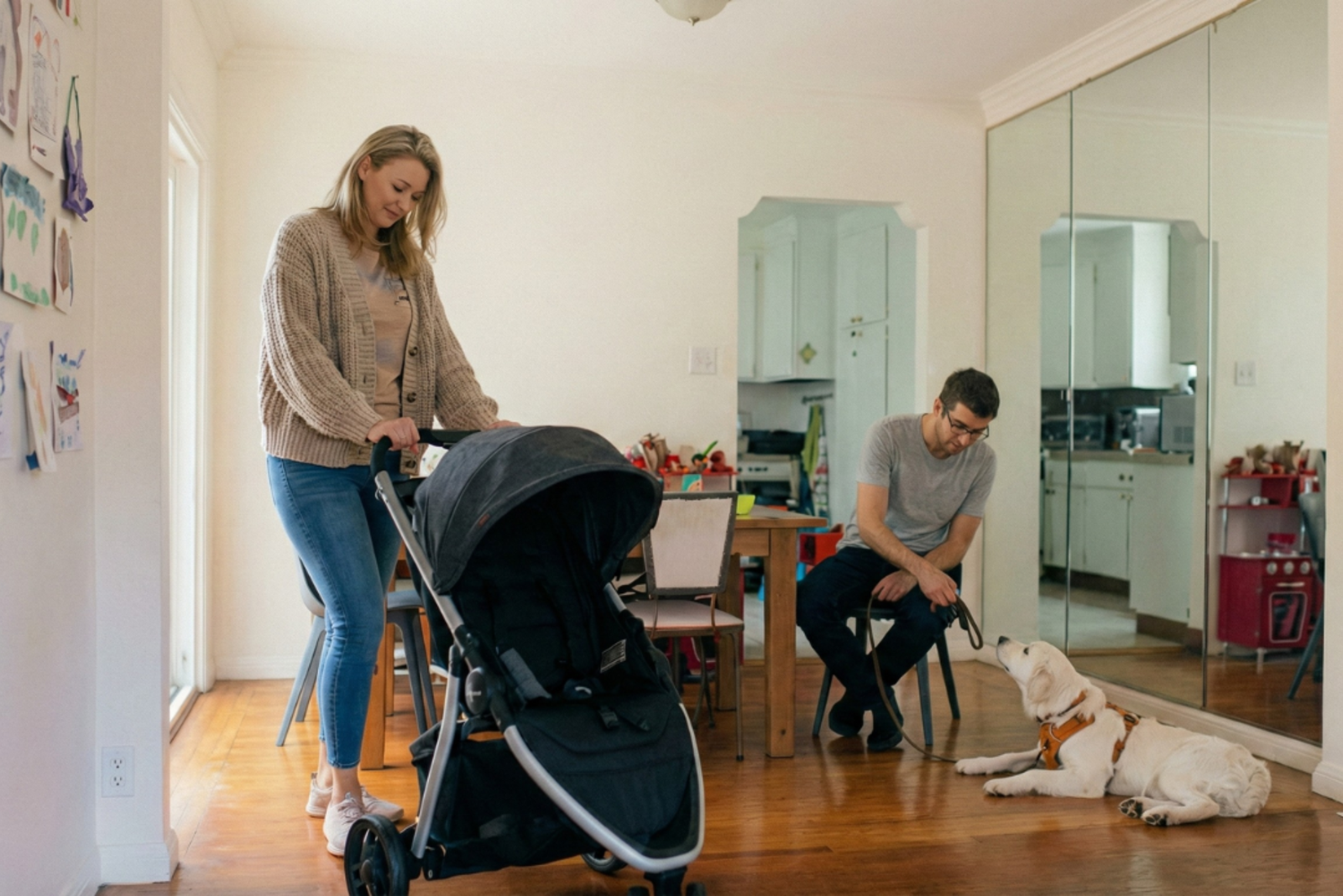
Instead, place the empty stroller in a familiar area. Let your dog investigate it at their own pace. Sniffing is normal and can help the dog understand that the stroller is simply another object in the environment.
Reward calm behaviour. If your dog looks at the stroller without becoming excited, give a reward. If the dog calmly approaches it, reward again.
Do not push the stroller directly toward your dog during the first sessions. The objective is to create familiarity rather than pressure.
Once your dog appears comfortable, move the stroller only a short distance. Reward your dog for remaining relaxed.
Practise Walking Beside an Empty Stroller
After your dog accepts the stationary stroller, begin combining the stroller with loose-leash walking.
Push the empty stroller slowly while your dog walks beside you. Start with only a few steps. Reward frequently when your dog stays in the desired walking area without crossing in front of the wheels.
If your dog moves ahead and tightens the leash, stop. Wait for the dog to return or loosen the leash before continuing.
This gradual approach helps your dog understand that the stroller is part of the normal walking routine. Short successful sessions are generally more productive than long sessions in which the dog becomes frustrated or overstimulated.
Choose a Safe Walking Position
Your dog should not walk directly in front of the stroller wheels. That position creates an unnecessary risk if the dog suddenly stops or changes direction.
A comfortable position beside you, away from the wheels, is usually easier to manage. The exact side can depend on your walking environment, the dog’s behaviour, and where you have the most control.
Keep the leash long enough for natural movement but short enough that your dog cannot suddenly cross the stroller’s path.
A standard leash is often easier to manage than a retractable leash during early stroller training because you have more predictable control.
Teach Your Dog to Stop Pulling
Pulling becomes more challenging when you are pushing a stroller because you may have less freedom to manage the leash.
Watch for early signs that your dog is about to pull. Your dog may speed up, become intensely focused on something ahead, lower their body, or gradually reach the end of the leash.
Intervene before the behaviour becomes intense.
If the leash becomes tight, stop the stroller. Wait for slack. Once your dog returns to a calmer position, reward and continue.
Avoid repeatedly jerking the leash or physically dragging your dog back into position. Clear communication and reinforcement allow the dog to understand what behaviour earns forward movement.
Use Direction Changes
A calm direction change can also help prevent your dog from developing momentum while pulling.
Practise turning with your dog before introducing major distractions. Use a cue such as “this way” and reward your dog for following.
Once the behaviour becomes familiar, you can use it during stroller practice.
The goal is not to constantly turn your dog away from everything interesting. Instead, you are giving your dog a reliable way to reconnect with you when the environment becomes difficult.
Teach Your Dog Not to Lunge
Lunging requires more careful management than ordinary pulling. A dog that lunges at another dog, bicycle, person, bird, or vehicle can suddenly create a difficult situation for the person handling the stroller.
First identify what triggers your dog. Different dogs react to different things, so observe the pattern rather than assuming the cause.
Once you know the trigger, increase your distance. Your dog should be able to notice the distraction without immediately barking, lunging, or straining against the leash.
Reward your dog for noticing the trigger and then returning attention to you.
Work Below the Reaction Threshold
If your dog is already barking, lunging, or pulling intensely, learning becomes much harder. Create more distance until your dog can think and respond to you.
For example, if your dog reacts when another dog is 10 feet away, begin training at a greater distance where your dog can remain relatively calm.
Reward calm observation. Over repeated sessions, you can gradually reduce the distance if your dog continues to succeed.
This is more useful than forcing a highly aroused dog to walk directly past a trigger.
Practise Emergency Turns
A reliable emergency turn is an important skill when learning how to train a dog to walk beside a stroller.
Start without the stroller. Teach your dog that a particular cue means “turn with me.” Practise it in your home, yard, or another quiet location.
Once your dog responds consistently, practise with the empty stroller.
Eventually, if an unexpected dog, cyclist, or other trigger approaches too closely, you have a rehearsed behaviour that can help you move away rather than trying to push through the situation.
If your dog becomes highly reactive, prioritize distance and safety instead of testing the limits of the training.
Practise Stopping, Starting, and Turning
Real stroller walks rarely happen in a perfectly straight line. You may need to stop at a crossing, slow down around pedestrians, turn onto another path, or pause unexpectedly.
Practise these changes in a quiet location.
Push the stroller a short distance, stop, reward your dog for remaining calm, and then start again. Practise wide turns before introducing tighter ones.
This teaches your dog that changes in your movement are normal and that they should stay connected to you rather than rushing around the stroller.
Gradually Add Real-World Distractions
Once your dog can walk calmly beside an empty stroller in a quiet location, slowly increase the difficulty.
You might move from a driveway to a quiet sidewalk. Later, you can introduce mild pedestrian activity, distant dogs, bicycles, or other distractions.
Change one major factor at a time whenever possible. If you introduce traffic, crowds, unfamiliar dogs, loud noises, and a long walk simultaneously, your dog may struggle.
If your dog repeatedly pulls or lunges, the environment is probably too difficult at that moment. Move somewhere quieter and rebuild the behaviour.
Gradual progression is a central part of successful stroller training.
Use Rewards Strategically
Food rewards can be extremely helpful during the learning stage, but they should not be the only form of reinforcement.
You can reward your dog with praise, a favourite sniffing opportunity, a brief pause, or access to something interesting when appropriate.
Initially, reward frequently for small successes. As your dog becomes reliable, gradually increase the distance between rewards.
For example, your dog may initially receive a treat every few steps. Later, the reward may come after a longer stretch of calm walking.
The important point is to reinforce the behaviour you actually want: a loose leash, safe positioning, attention to you, and calm movement.
Common Mistakes to Avoid
When learning how to train a dog to walk beside a stroller, several mistakes can slow progress.
The first is starting with a busy outdoor walk. A crowded pavement can contain too many distractions for a dog that is still learning.
Another mistake is allowing occasional pulling to work. If pulling sometimes gets the dog closer to another animal or interesting smell, the behaviour can become stronger because it has occasionally paid off.
Avoid expecting a perfect heel. Your dog needs enough freedom to walk naturally, sniff appropriately, and adjust their position without entering the stroller’s path.
Finally, do not punish lunging by repeatedly forcing the dog toward the trigger. If the dog is overwhelmed, create distance and return to a level where learning is possible.
When to Get Professional Help
Some dogs need more support than basic leash training.
If your dog repeatedly lunges at people or animals, has redirected aggression toward the leash or handler, escapes equipment, or becomes impossible to control around the stroller, work with a qualified force-free trainer or veterinary behaviour professional.
Professional guidance is especially valuable when safety is becoming a concern. Training should never require you to risk losing control of the dog or stroller.
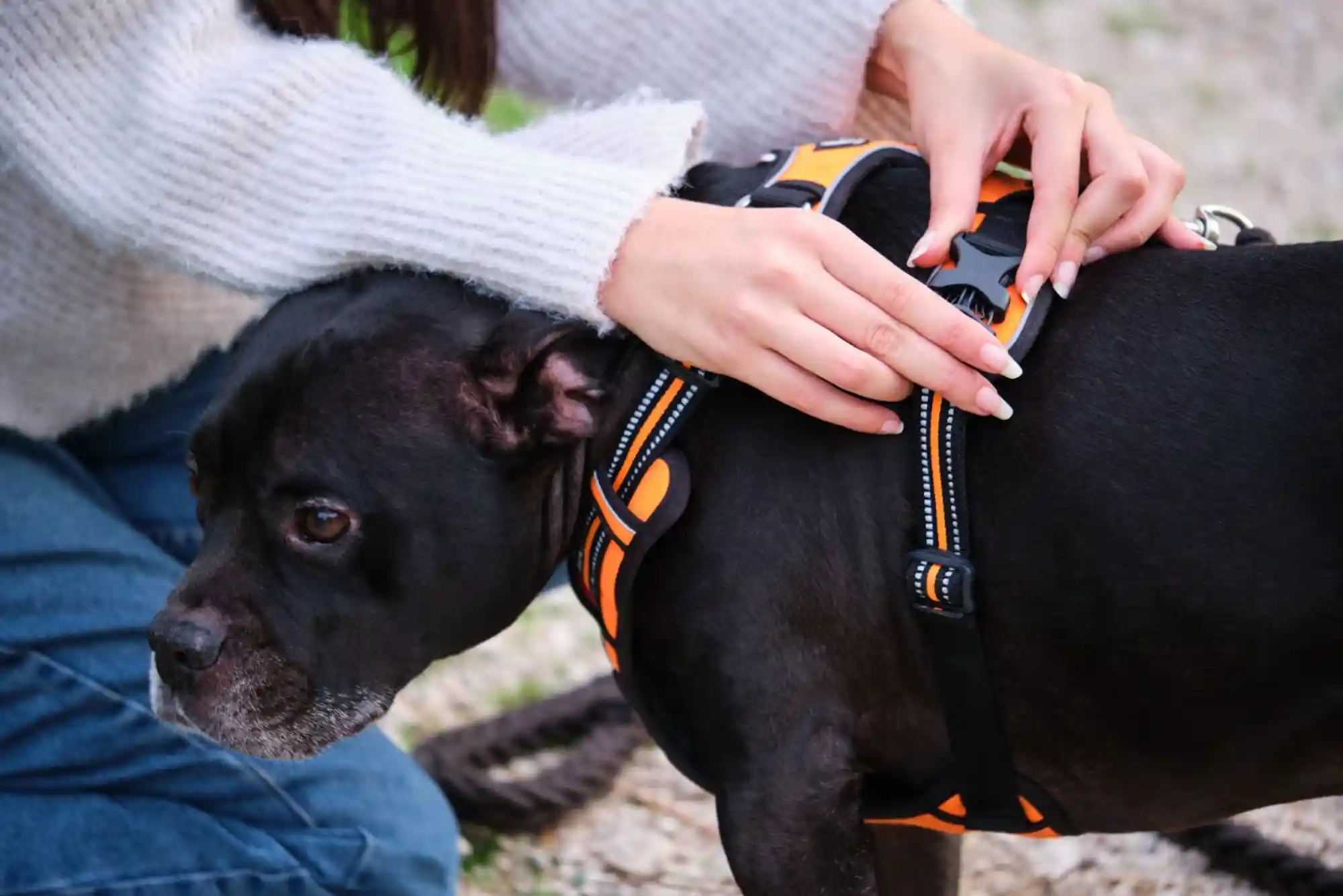
Also check that your dog’s collar or harness fits correctly and that the leash and stroller setup are appropriate for your dog’s size and strength.
How Long Does Stroller Training Take?
There is no universal timeline. A dog that already walks calmly on a loose leash may adapt relatively quickly, while a dog with significant pulling or reactivity may require much longer.
Focus on progress rather than a deadline.
A five-minute session with several calm successes is valuable. If your dog becomes overwhelmed after ten minutes, ending the session and trying again later can be more productive than continuing until everyone is frustrated.
Consistency matters more than marathon sessions.
Learning how to train a dog to walk beside a stroller without pulling or lunging is a gradual process. Start with loose-leash skills, introduce the stationary stroller, practise with an empty moving stroller, and reward your dog for staying calm and appropriately positioned.
FAQs
How do I get my dog used to walking with a stroller?
Start with the stroller stationary and let your dog investigate it calmly. Reward relaxed behaviour, then gradually introduce small movements. Once your dog is comfortable, practise walking beside the empty stroller in a quiet area before going on longer outdoor walks.
How do I stop my dog from pulling while walking with a stroller?
When your dog pulls, stop moving the stroller. Wait for the leash to become loose or for your dog to return toward you. Reward the loose leash, then continue walking. Avoid allowing pulling to become the way your dog makes forward progress.
How do I stop my dog from lunging at other dogs while walking?
Identify the distance at which your dog can notice another dog without immediately lunging. Work at that distance, reward calm attention, and gradually decrease the distance only when your dog remains relaxed. If your dog becomes highly reactive, increase distance again.
Should my dog walk in front of or behind a stroller?
Your dog should generally walk beside you in a position that keeps them clear of the stroller’s wheels. Walking directly in front of the stroller makes sudden stops and direction changes more difficult to manage.
Can I train an older dog to walk beside a stroller?
Yes. Older dogs can learn new walking habits. Training may take longer if pulling or reactivity has become established, but gradual practice and consistent reinforcement can still improve stroller walking.
What should I do if my dog is afraid of the stroller?
Do not force the dog close to it. Keep the stroller at a comfortable distance and reward calm behaviour. Gradually decrease the distance as your dog becomes more comfortable. If fear remains severe, professional behaviour support can help.