Introduction
Flying with dogs as checked baggage or cargo requires careful planning, suitable equipment, and an understanding of airline safety rules. Although many airlines transport pets, their policies differ by route, aircraft, season, and dog breed. Temperature restrictions can also affect whether your dog can travel on a particular flight.
Understanding flying with dogs as checked baggage or cargo helps you choose the appropriate transport option. It also reduces the risk of rejected bookings, unsuitable crates, and weather-related delays. Whether you are relocating internationally or planning a long-distance journey, preparation is essential for your dog’s safety.
This guide explains checked baggage versus air cargo, temperature embargoes, crate specifications, and the practical steps involved in arranging a safe flight.
Understanding Flying with Dogs as Checked Baggage or Cargo
Airlines generally transport dogs in the cabin, as checked baggage, or through their cargo services. The available option depends on the airline’s policies, your dog’s size, and your destination.
What Does Checked Baggage Mean for Dogs?
When dogs travel as checked baggage, they are checked in through the passenger airline’s pet-handling process. They travel in an approved kennel inside a designated aircraft compartment. This option may be available on eligible routes, subject to airline restrictions.
Owners usually complete the required documentation before departure. The airline checks the kennel, confirms the booking, and provides instructions for collection after arrival. However, not every airline accepts pets as checked baggage.

What Does Air Cargo Mean for Dogs?
Air cargo transportation involves shipping a dog through an airline’s cargo department or an approved animal transportation provider. Depending on the carrier, the shipment may travel on a passenger aircraft or a dedicated cargo aircraft.
Cargo arrangements can be useful when a dog exceeds passenger-pet limits or travels without its owner. They may also be necessary for certain international routes.
However, cargo transportation involves additional procedures. These can include advance reservations, cargo terminal drop-off, airway bills, customs clearance, and collection from a designated facility.
Which Option Is More Suitable?
The right option depends on your dog’s circumstances and the airline’s rules. Checked baggage may offer a simpler process when the airline accepts your dog on your passenger itinerary. Cargo may provide a necessary alternative when checked-pet services are unavailable.
Neither option automatically guarantees a safer journey. Consider the complete itinerary, transfer arrangements, ground handling, weather conditions, and the time your dog will spend away from you.
Temperature Embargoes When Flying with Dogs
Temperature embargoes are restrictions that airlines apply when weather conditions create risks for animals. Extreme heat and cold can affect dogs during loading, unloading, transfers, and time spent on airport ramps.
These restrictions are particularly important because an aircraft’s animal compartment is not the only environment that matters. Ground transportation and handling areas can expose animals to uncomfortable or dangerous temperatures.
How Heat Restrictions Affect Pet Flights
High temperatures can increase the risk of overheating, dehydration, and heatstroke. Dogs with short muzzles, including pugs and bulldogs, may face additional breathing difficulties.
Some airlines suspend pet transportation when forecast temperatures exceed their operational limits. Restrictions may apply at the departure airport, destination airport, or connecting airport.
For example, a flight may appear suitable because the departure city is cool. However, extreme heat at the destination could prevent the airline from accepting the booking.
Airlines may also impose restrictions during particular hours. Early-morning or late-evening departures can sometimes reduce heat exposure, but availability depends on the route and carrier.
Cold Weather Embargoes
Cold weather can also affect pet transportation. Prolonged exposure to low temperatures may cause hypothermia, particularly in small dogs, puppies, elderly animals, and breeds with thin coats.
Airlines may restrict transportation when temperatures fall below their specified limits. They may consider conditions at departure, arrival, and transfer airports.
Some carriers apply different rules depending on the aircraft compartment, kennel arrangements, and ground-handling procedures. Therefore, owners should never assume that an airline accepts pets throughout the year.
How to Check Temperature Restrictions
Contact the airline’s animal transportation department before purchasing a non-refundable ticket. Ask about seasonal embargoes, temperature thresholds, and restrictions at every airport on your itinerary.
Request confirmation that your dog can travel on the specific flight. Also, ask what happens if weather conditions change after booking.
If an embargo applies, you may need to reschedule the flight or use another approved transportation arrangement. Never attempt to bypass a restriction by misrepresenting your dog’s breed, size, or destination.
Airline-Approved Dog Crate Specifications
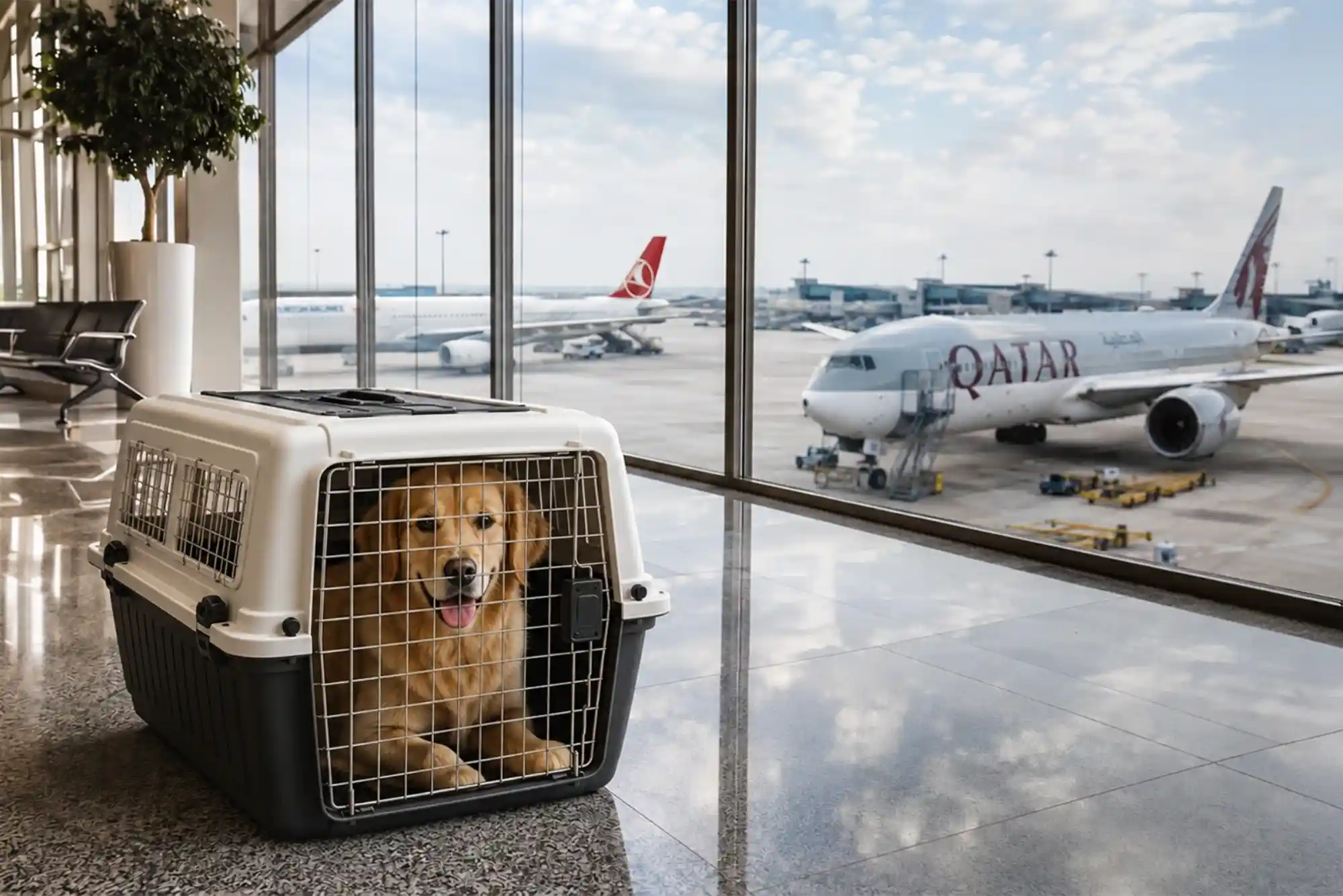
An appropriate travel kennel protects your dog and allows airline staff to handle the animal safely. Crate requirements vary by carrier, aircraft, destination, and applicable animal transport standards.
Choosing the Correct Crate Size
Your dog must have enough space to stand naturally, turn around, sit comfortably, and lie down in a normal position. The kennel should not restrict movement or force the dog into an unnatural posture.
Measure your dog before buying a crate. Consider body length, standing height, and the distance from the nose to the base of the tail.
Do not choose a kennel based solely on your dog’s weight. Two dogs weighing the same amount may require different kennel dimensions.
An oversized kennel can also create handling or loading difficulties. Always compare your measurements with the airline’s current sizing requirements before booking.
Construction and Ventilation Requirements
Airline-approved kennels generally need a sturdy structure, secure fasteners, and adequate ventilation. The door must close securely and prevent accidental escape during handling.
Many airlines require rigid-sided kennels for checked or cargo transportation. They may restrict soft-sided carriers to approved cabin travel.
Ventilation openings must provide sufficient airflow without creating unnecessary escape or injury risks. Kennel construction and door design must also comply with the carrier’s specific requirements.
Food and water containers may need to be attached to the kennel door or otherwise accessible to handlers. Follow the airline’s instructions regarding their design and placement.
Preparing the Crate for Travel
Introduce the kennel several weeks before departure whenever possible. Let your dog explore it voluntarily and reward calm behaviour inside.
Gradually practise resting with the door closed. This helps your dog become familiar with the environment before the flight.
Use absorbent bedding that does not obstruct ventilation or create a choking risk. Avoid loose objects that could shift during handling.
Label the kennel with your contact information and your dog’s details. Attach any required travel documents according to the airline’s instructions.
Before departure, inspect the door, fasteners, handles, and overall structure. A damaged or unsuitable kennel may result in refusal at check-in or cargo acceptance.
Preparing Your Dog for International Air Travel
Flying with dogs as checked baggage or cargo often involves more than airline approval. International destinations may require health certificates, vaccinations, microchips, import permits, and specific entry procedures.
Health Certificates and Vaccination Requirements
Consult your veterinarian well before departure. Some destinations require veterinary health certificates issued within a specific period. Others require government endorsement or additional disease-control documentation.
Rabies vaccination requirements vary by destination. Certain countries also require blood tests or waiting periods before entry. Missing a deadline can delay travel even when your airline booking is confirmed.
Check the official import requirements of your destination country. If your dog is connecting through another country, confirm whether transit rules apply.
Breed Restrictions and Veterinary Advice
Some airlines restrict brachycephalic breeds because their short airways can increase breathing risks. Restrictions may also cover certain crossbreeds, snub-nosed cats, or dogs with particular health concerns.
Ask your veterinarian whether your dog is fit to fly. Discuss age, respiratory health, anxiety, and existing medical conditions.
Sedation is generally discouraged for air travel unless a veterinarian determines otherwise. Sedatives can affect balance, breathing, and the ability to respond to changes during transportation. Always follow professional veterinary advice and the airline’s medication policy.
Booking and Managing Your Dog’s Flight
A successful journey begins with confirming every important detail before departure. Do not assume that a ticket purchase automatically secures space for your dog.
Confirm Availability Before Booking
Contact the airline to confirm whether it accepts dogs as checked baggage or cargo on your route. Ask about aircraft restrictions, kennel dimensions, seasonal embargoes, and maximum permitted animal weight.
Some flights have limited animal capacity. Aircraft changes can also affect pet acceptance after the original booking.
Request written confirmation of the pet arrangement and keep the airline’s instructions accessible. If you use a pet shipper, verify its responsibilities for airport handling, documentation, and collection.
Plan for Transfers and Delays
Direct flights can reduce the number of handling stages. However, they are not always available or suitable for every destination.
If your itinerary includes connections, ask whether your dog will remain on the same aircraft or require transfer handling. Confirm the arrangements for water, supervision, and temperature-controlled holding facilities.
Avoid tight connections when possible. Delays, customs procedures, and cargo terminal schedules can extend the total journey.
Also, establish an emergency contact who can assist if the flight changes. Keep your veterinarian’s details and essential travel documents available.
Prepare Your Dog on Departure Day
Follow the airline’s instructions about feeding, water, exercise, and kennel preparation. Avoid making sudden changes to your dog’s routine immediately before departure.
Allow enough time for check-in or cargo acceptance. Cargo shipments may have different deadlines from passenger check-in.
Ensure your dog has access to water according to the carrier’s requirements. Do not attach a leash inside the kennel where it could become tangled.
After arrival, collect your dog promptly and assess its condition. Offer water and a quiet place to rest. Contact a veterinarian if you notice unusual breathing, weakness, vomiting, disorientation, or signs of overheating.
Frequently Asked Questions
Can dogs fly as checked baggage or cargo?
Yes, depending on the airline, route, aircraft, dog breed, and size. Some carriers accept eligible dogs as checked baggage, while others require cargo transportation. Confirm the available service directly with your airline before booking.
What temperature is too hot for dogs to fly?
There is no single temperature limit that applies to every airline. Each carrier may establish its own thresholds and operating restrictions. Airport conditions, ground exposure, breed, and handling procedures can all influence acceptance.
What size crate does a dog need for air travel?
The kennel must allow your dog to stand naturally, turn around, sit, and lie down comfortably. Exact dimensions depend on the dog’s measurements and the airline’s rules. Check the carrier’s requirements before purchasing a kennel.
Is flying as cargo safe for dogs?
Cargo transportation can be arranged with appropriate safeguards, but risks remain. Safety depends on your dog’s health, weather conditions, kennel suitability, handling quality, and itinerary. Discuss your dog’s individual circumstances with a veterinarian and an experienced animal transport provider.
Do dogs need food and water during a flight?
Dogs need appropriate access to water throughout their transportation arrangements. Feeding instructions depend on the dog’s health, flight duration, and veterinary advice. Follow the airline’s requirements for attached water containers and feeding arrangements.
Can I fly with a dog during summer?
Sometimes, but seasonal restrictions may apply. High temperatures can trigger airline embargoes or prevent pet acceptance on specific routes. Check conditions at every airport and confirm your booking shortly before departure.
Conclusion
Flying with dogs as checked baggage or cargo requires careful coordination between owners, veterinarians, and airlines. Temperature embargoes, kennel specifications, breed restrictions, and international documentation can all influence whether a journey proceeds as planned.
Related Reading: Resource Guarding in Dogs: How to Stop Food and Toy Aggression with Trade Drills